
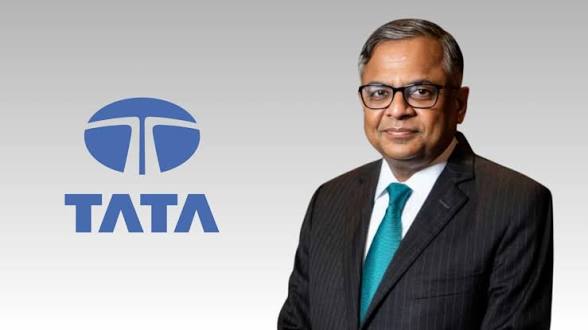
“Take Care of Employees”: Tata Sons’ Chandrasekaran Warns of Tough Times Ahead
In a significant message that reflects the changing global economic landscape, Tata Sons Chairman N. Chandrasekaran has issued a strong advisory to CEOs across the Tata Group. Emphasizing the importance of employee well-being, Chandrasekaran has urged leaders to prioritize their workforce as the world faces uncertain economic conditions.
This statement comes at a time when global markets are experiencing volatility, inflationary pressures remain persistent, and geopolitical tensions continue to affect supply chains. For a conglomerate like the Tata Group, which operates across multiple industries including IT, steel, automotive, and hospitality, such cautionary advice highlights the seriousness of the situation.
Understanding the Context: Why This Warning Matters
The global economy has been undergoing rapid transformation. From post-pandemic recovery challenges to ongoing geopolitical conflicts, businesses are navigating an environment filled with unpredictability. Chandrasekaran’s warning is not just a routine statement—it is a strategic call for preparedness.
India, while being one of the fastest-growing major economies, is not immune to global shocks. Export-driven sectors, IT services, and manufacturing units are particularly sensitive to changes in international demand. As a result, companies must balance growth ambitions with financial prudence.
Key Message: Employees at the Center of Strategy
One of the most striking aspects of Chandrasekaran’s message is the emphasis on employee care. Traditionally, during tough economic times, companies focus on cost-cutting measures such as layoffs and reduced hiring. However, Tata Group’s approach appears to prioritize human capital.
- Focus on employee well-being and mental health
- Ensure job security wherever possible
- Maintain transparent communication
- Invest in upskilling and reskilling
This approach aligns with modern leadership practices, where employees are seen as long-term assets rather than short-term costs.
Comparison Table: Traditional vs Modern Corporate Approach
| Aspect | Traditional Approach | Modern Approach (Tata Strategy) |
|---|---|---|
| Cost Management | Layoffs and hiring freezes | Employee retention and redeployment |
| Employee Role | Operational resource | Strategic asset |
| Communication | Limited transparency | Open and continuous dialogue |
| Training | Minimal investment | Upskilling and reskilling focus |
Impact Across Tata Group Companies
The Tata Group includes some of India’s most prominent companies such as Tata Consultancy Services (TCS), Tata Steel, Tata Motors, and Indian Hotels Company Limited. Each of these sectors faces unique challenges:
- IT Sector: Slowing global tech spending may affect revenue growth.
- Automobile Industry: Supply chain disruptions and EV transition challenges.
- Steel Industry: Fluctuating commodity prices and global demand.
- Hospitality: Recovery post-pandemic but still sensitive to economic downturns.
By focusing on employee care, these companies can maintain operational stability and long-term growth even during challenging times.
Leadership Lessons from Chandrasekaran
Chandrasekaran’s leadership style has often been praised for its clarity and forward-thinking approach. His recent message reinforces several key leadership principles:
- Empathy in leadership is critical during uncertain times.
- Proactive planning helps organizations stay resilient.
- People-first strategy leads to sustainable growth.
These lessons are not just applicable to large conglomerates but also to startups and small businesses.
Economic Outlook: What Lies Ahead?
Experts believe that the next few quarters could be challenging for global businesses. Key concerns include:
- Persistent inflation in major economies
- Interest rate hikes by central banks
- Geopolitical uncertainties
- Shifts in consumer behavior
Despite these challenges, India’s domestic demand and government policies provide a cushion. However, companies must remain cautious and agile.
Why Employee Care is a Competitive Advantage
In today’s knowledge-driven economy, employees are the backbone of innovation and productivity. Companies that invest in their workforce often outperform their competitors in the long run.
Benefits of prioritizing employees include:
- Higher productivity and engagement
- Lower attrition rates
- Stronger employer branding
- Improved customer satisfaction
Case Insight: Tata Group’s Legacy of Employee Welfare
The Tata Group has a long-standing reputation for prioritizing employee welfare. From pioneering labor welfare policies in India to offering comprehensive benefits, the group has consistently set benchmarks in corporate responsibility.
Chandrasekaran’s recent statement is a continuation of this legacy, reinforcing the group’s commitment to its workforce.
Conclusion: A Strategic and Humane Approach
As the global economy faces uncertainty, Tata Sons Chairman N. Chandrasekaran’s message serves as a timely reminder for businesses worldwide. By placing employees at the center of their strategy, companies can navigate tough times more effectively while building a resilient and future-ready organization.
The coming months may test the strength of businesses, but those that prioritize people, adapt quickly, and lead with empathy are more likely to emerge stronger.
FAQs
1. Why did Chandrasekaran warn Tata CEOs?
He highlighted potential economic challenges and urged leaders to prepare by focusing on employee well-being and organizational resilience.
2. What does “take care of employees” mean in this context?
It includes ensuring job security, supporting mental health, investing in skills, and maintaining transparent communication.
3. How does this impact Tata Group companies?
Each company may adopt strategies to retain talent, optimize costs without layoffs, and maintain operational efficiency.
4. Is this approach unique to Tata Group?
While many companies are adopting similar strategies, Tata Group has historically been a pioneer in employee welfare.
5. What can other businesses learn from this?
Organizations can learn to balance profitability with people-centric policies to ensure long-term success.

Gaurav Yadav is a news writer and digital publisher from Haryana, India. He focuses on covering latest news, technology updates, automobile developments, and trending public-interest topics. With a strong interest in how information impacts everyday readers, Gaurav aims to present news in a clear, factual, and easy-to-understand manner.
He actively tracks ongoing trends, official announcements, and emerging stories to ensure readers receive timely and reliable updates. Through his work, he is committed to maintaining transparency, accuracy, and responsible reporting while building a trustworthy news platform for a wide audience.