
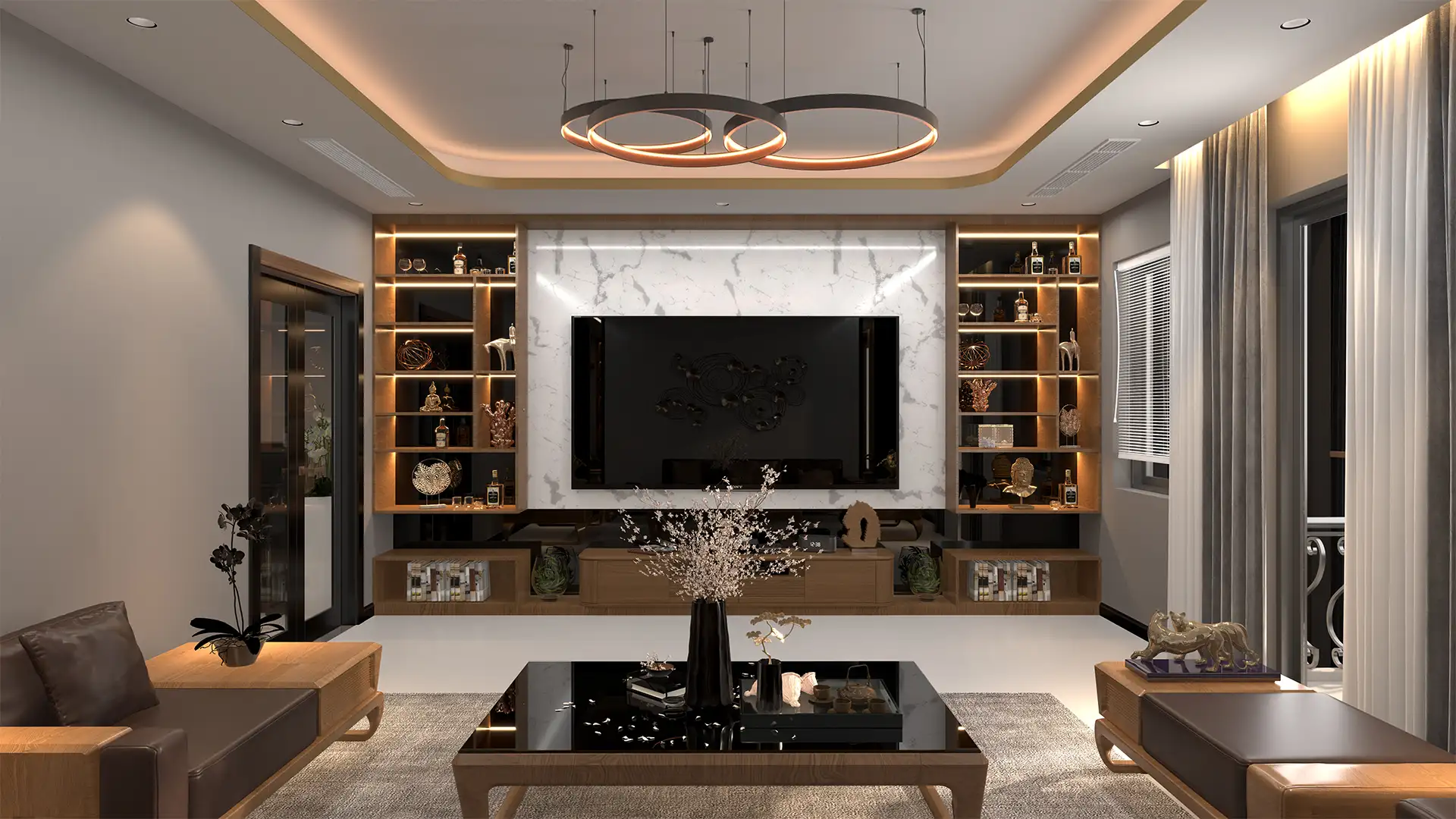
Introduction: The 200-Square-Foot Crisis
Let me paint you a picture. You walk into your living room. It’s Tuesday night. The mail is on the ottoman, a half-empty coffee mug is on the floor because the side table is too small, and your partner just bumped their shin on the corner of the oversized armchair that your mother-in-law insisted was “a classic.”
You sigh. You feel trapped. Not just by the mess, but by the walls.
I’ve been an interior designer for 12 years. I have walked into Manhattan studios the size of a walk-in closet and Los Angeles bungalows where the sofa touches three walls simultaneously. Here is the truth no one tells you: Size is not a limitation; it is a constraint that breeds creativity.
Learning how to decorate a small living room isn’t about making it look like a dollhouse. It’s about engineering a feeling. The feeling of breathing room. The feeling of flow.
In this guide, I am going to walk you through every single trick I have stolen from high-end architects, feng shui masters, and IKEA hackers. We will cover small living room layout ideas, the magic of negative space, and why that dark grey paint might actually be your best friend.
By the time you finish reading, you will never look at your cramped quarters the same way again.
The Psychology of Small Spaces (Why We Feel Cramped)
Before we move a single piece of furniture, we need to talk about your brain.
In 2014, researchers at UCLA found that women in cluttered, cramped homes had higher cortisol (stress hormone) levels. Your small living room isn’t just annoying; it might be exhausting you.
The Visual Weight Theory
Every object in a room has “visual weight.” A black leather sectional has heavy weight. A clear glass side table has light weight. Most people fail at how to decorate a small living room because they distribute visual weight poorly. They shove all the heavy things against one wall, creating a seesaw effect.
The “Cozy vs. Cramped” Line
There is a fine line between “cozy hygge den” and “hoarder’s closet.” The difference is negative space. You need gaps. You need breathing room for your eyes to rest.
Expert Insight: “When I walk into a small living room, the first thing I look for is the ‘landing strip’—the empty space in the center of the rug. If it’s less than 18 inches of empty floor, the room is already dead.” – Sarah Richardson, Design Psychologist.
Phase 1: The Foundation – Color & Light (Making Walls Vanish)
If you only remember one section of this how to decorate a small living room guide, remember this: Paint is the cheapest renovation you can do.
The Great White Lie (And Why You Should Ignore It)
Every blog tells you to paint your small room white. “It reflects light!” they scream. But let me ask you: Have you ever sat in an all-white, north-facing room in December? It looks like a refrigerator. It’s cold. It’s clinical.
Instead, use tonal shades.
- For dark rooms (no windows): Use a warm off-white like Benjamin Moore Swiss Coffee or Sherwin-Williams Alabaster. It has a hint of yellow that mimics sunlight.
- For bright rooms (too much sun): Go dark. A dark charcoal or deep navy blue (Hale Navy) actually pushes the walls outward visually. It confuses the eye into thinking the wall is a shadow, not a boundary.
The 60-30-10 Rule
This is the golden ratio of decorating.
- 60% Dominant color: Walls and large rug.
- 30% Secondary color: Sofa and curtains.
- 10% Accent color: Pillows, art, a throw blanket.
For a small living room, keep the 60% and 30% within the same color family (monochromatic). This creates an unbroken line of sight, which is the #1 trick for how to make a small living room look bigger.
Ceiling Color Controversy
Paint your ceiling the same color as your walls, but in a flat finish. This eliminates the harsh line where the wall stops and the ceiling starts. Suddenly, the box opens up.
Pro Tip for Lighting: Use curtain rods that extend 12 inches past the window frame. When curtains hang outside the frame, the window looks wider. You want the window to look like the main feature, not the drywall.
Phase 2: Layout Engineering – The 3-Foot Rule & Traffic Flow
Most people approach small living room furniture arrangement by “pushing everything against the walls.” This is a disaster. It creates a bowling alley effect and makes the center of the room a dead zone.
The “Floating” Method
Pull your sofa 12 inches off the wall. I know this sounds counterintuitive—”But I don’t have space!”—but try it. That 12-inch gap behind the sofa creates a pathway for your eye. It implies there is more room behind there.
The Three Layouts That Always Work
Layout A: The L-Shape Anchor
- Best for: Square rooms.
- How to do it: Place a loveseat against the long wall, and a pair of armchairs perpendicular to it, creating an “L.” Float a round coffee table in the corner of the L.
- Why it works: Round tables eliminate sharp corners, which are dangerous in tight traffic zones.
Layout B: The Facing Off
- Best for: Narrow, rectangular rooms (like a converted garage).
- How to do it: Two small sofas facing each other across a long, narrow coffee table.
- Why it works: This is the best layout for conversation. It makes the room feel wide rather than long.
Layout C: The Zone Defense
- Best for: Studio apartments where the living room is also the dining room.
- How to do it: Use the back of a slim sofa as a room divider. Place the desk or dining table behind the sofa.
- Why it works: One room, two purposes, no walls needed.
The 3-Foot Rule (Non-negotiable)
You must maintain a 30-to-36-inch walkway between furniture pieces. If your coffee table is 24 inches from the sofa, you will knock your shins. If it’s 18 inches, you won’t sit down because it feels claustrophobic.
PRODUCTS-
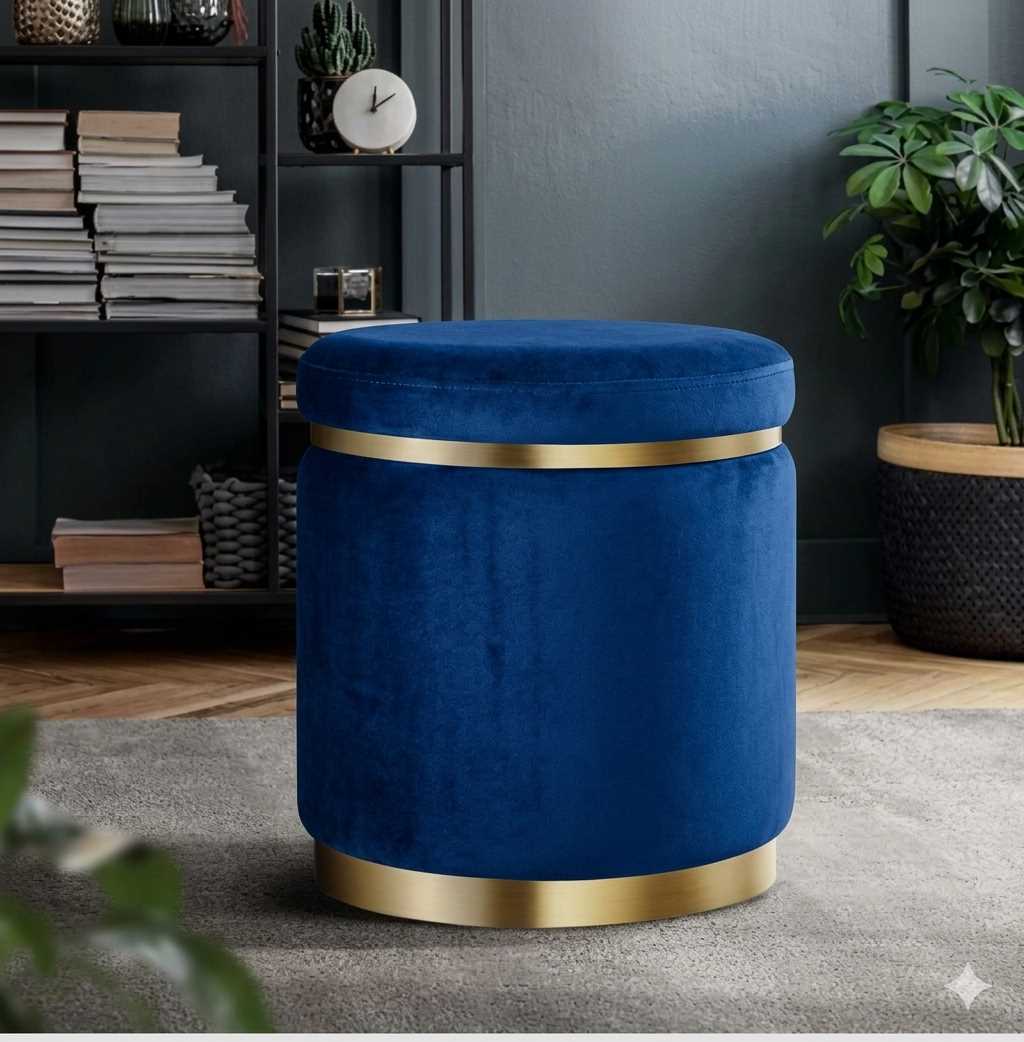
1.Storage Ottoman
Phase 3: Furniture Selection – The “Less But Better” Philosophy
You want to know the fastest way to fail at how to decorate a small living room? Buying a “sectional” because “it fits in the corner.” Stop it.
The Leg Factor
Furniture that sits directly on the floor (like a boxy IKEA Kivik without legs) looks heavy and squat. Furniture with exposed, thin metal or wood legs (like the IKEA Stockholm or any mid-century modern piece) creates a gap between the furniture and the floor.
That gap allows light to pass under the furniture. Light = Space.
The Glass Revolution
In a tiny space, solid wood is the enemy. Swap one major piece for something transparent.
- Acrylic chairs: They disappear. You see the wall behind them.
- Glass coffee tables: They don’t block the view of the rug.
- Lucite shelving: Holds your books but looks like air.
Sofa Dimensions (The Hard Truth)
For a small living room (anything under 200 sq ft), your sofa should be no deeper than 32 inches and no longer than 72 inches. A 84-inch sofa will swallow your room.
My recommendation: The IKEA Söderhamn (modular, low back) or the Article Sven (if you have the budget). Low backs make the ceiling look higher.
The Ottoman Switcheroo
Do not buy a coffee table. Buy a large, upholstered ottoman with storage inside.
- Pros: Soft edges are safe for kids and shins. You can put a tray on top to hold drinks (making it a table). You can store blankets inside.
- Cons: None. This is the best space saving furniture for living rooms.
Phase 4: Vertical Attack – How to Decorate a Small Living Room Upwards
You are ignoring 60% of your available real estate: your walls.
When the floor is full, you build a skyscraper.
The High Shelf
Install shelving 12 inches from the ceiling. Not at eye level. High. Use these shelves for:
- Books you’ve already read (spines facing out).
- Baskets hiding ugly electronics.
- A trailing plant like Pothos that hangs down.
Why does this work? It draws the eye up. Instead of measuring the room by the floor space, your brain measures the volume. High shelves suggest volume.
Floor-to-Ceiling Curtains
Remember earlier about the curtain rod extending past the window? Now install that rod 1 inch from the ceiling. Get curtains that drag on the floor (literally touching the carpet).
- The Illusion: Because the curtains start at the ceiling and end at the floor, the window—and by extension the wall—looks much taller.
The Gallery Wall Hack
Small living room wall decor is tricky. A single small frame looks lost. A massive frame looks heavy.
- The Solution: A gallery wall of 9 small frames arranged in a 3×3 grid.
- The Trick: Use frames that match the wall color. If your wall is beige, use beige mats and white frames. This creates texture without visual noise.
Phase 5: Storage Hacks That Hide the Clutter
A cluttered small living room isn’t a design problem; it’s a storage problem. You don’t need less stuff; you need smarter homes for your stuff.
The Media Console Lie
Most media consoles are 15 inches deep. That is wasted space. You only need 8 inches for a cable box and a soundbar.
- The Hack: Use a narrow console table (8 inches deep) behind the sofa or against the wall. Mount the TV on the wall. Store video games in flat baskets underneath.
The “Charging Drawer”
Clutter is usually wires. Remotes, phone chargers, batteries.
- The DIY: Buy a desk grommet (a hole cover with a slot) and drill it into the top of your side table. Run the charging cable up through the table. Now your phone sits on the table, but the wire is hidden underneath in a basket.
Multifunctional Furniture (Real List)
- Storage ottoman: Holds 4 blankets.
- Nesting tables: Two tables that slide under each other. Use one as a side table, pull the other out when guests arrive.
- Murphy bed (if combined with bedroom): The ultimate space saver. Costs $2k installed, but adds $5k to resale value.
The Cable Management Box
Buy a $15 white box from Amazon. Put your power strip inside. Close the lid. Instantly, the “spider nest” of wires under your desk is gone. Visual silence is luxury.
Phase 6: Lighting Strategies for Depth & Drama
A small room with one overhead light looks like an interrogation room. You need layers of light.
Layer 1: Ambient (The Ceiling)
If you have a boob light (the dreaded flush mount), replace it with a semi-flush mount or a sputnik chandelier. A chandelier in a small room is ironic and brilliant. It pulls the eye up.
Layer 2: Task (The Reading)
Wall sconces are your best friend. They take up zero floor space. Hardwire them on either side of the sofa. No cords, no bulky lamps.
Layer 3: Accent (The Mood)
LED strip lights behind the TV (bias lighting). This reduces eye strain and creates a glow that makes the TV float away from the wall.
The Corner Lamp
Place a tall, skinny arc lamp in the corner. It fills the empty vertical space and casts light downward, creating a cozy “cave” effect.
Pro Tip: Use 2700k (warm white) bulbs exclusively. Daylight bulbs (5000k) make a small room feel like a hospital operating room.
Phase 7: Mirrors & Illusions – The Magician’s Toolkit
Mirrors are the oldest trick in the book for how to make a small living room look bigger, but 90% of people place them wrong.
The Window Trick
Hang a large mirror on the wall opposite the window. When you sit on the sofa, you should see the reflection of the outdoors. This effectively doubles the window.
The Hallway Illusion
If your living room opens to a dark hallway, place a mirror at the end of the hallway. It looks like a portal to another room.
The Puddle Mirror
Lean a large, floor-length mirror against the wall (not hung). Lean it at a 10-degree angle. It reflects the floor and the ceiling, creating an infinite loop effect.
Do NOT Do This
Do not cover an entire wall in mirror tiles (looking at you, 1980s). It looks dated and creates “mirror anxiety” (you always see yourself moving).
Phase 8: Style Deep Dives
Let’s apply these rules to specific aesthetics.
1. Minimalist Small Living Room
- Color: White, beige, mushroom grey.
- Furniture: One low sofa, one marble side table.
- Rule: Everything must have a purpose. If you haven’t used it in 30 days, it goes to storage.
- Wall decor: One very large, very simple abstract canvas.
2. Maximalist Small Living Room
- The Paradox: How can you be maximalist in a small space? By using small patterns.
- Strategy: Paint the walls dark green. Cover the sofa in a tiny floral print. Hang 20 small frames.
- Secret: Maximalism hides the edges of the room. You can’t tell where the wall ends, so the room feels infinite.
3. Modern Small Apartment Ideas
- Materials: Chrome, glass, white leather.
- Key piece: A Noguchi coffee table (glass top, wood base). It is sculpture and furniture.
- Lighting: A Sputnik chandelier.
4. Bohemian (Boho) Tiny Living Room
- Texture over color: Use macrame, jute rug, cotton throws, rattan.
- Low profile: Floor cushions instead of armchairs. A low Japanese-style sofa.
- Plants: A Monstera in the corner. A string of pearls hanging from the ceiling.
Phase 9: Budget vs. Luxury – How to Decorate a Small Living Room for $500 vs $5,000
You do not need to be rich to have a good eye.
The $500 Makeover (Renter Friendly)
- Paint (1 accent wall): $50
- Peel-and-stick wallpaper (for the back of a bookshelf): $30
- Large mirror from Goodwill (spray paint frame gold): $40
- Two floor cushions (instead of a new sofa): $60
- Bamboo blinds (instead of curtains): $80
- LED strip lights for behind TV: $20
- Three large pothos plants (from cuttings): $15
- Storage ottoman (Amazon Basics): $70
- Throw pillows (covers only, reuse inserts): $35
- Paint touch-up kit: $100 (misc)
Total: ~$500. Focus on lighting and mirrors. Ignore furniture replacement.
The $5,000 Investment (Luxury)
- Custom-fit Roman shades (fabric): $800
- Restoration Hardware cloud sofa (slim profile): $2,500
- Vintage Persian rug (9×12, cut to fit): $800
- Original art (local artist, large scale): $400
- Flos Arco floor lamp (replica or real): $300
- Hardwired wall sconces (install electrician): $200
- Custom built-in bookshelves (DIY plywood): $500
Total: ~$5,500. Here, you are paying for custom fit and heirloom materials.
Phase 10: The 10 Deadly Sins of Small Living Room Decor
Read this list. I guarantee you are guilty of at least three.
- The Oversized Rug: A rug that is too small makes the room look like a postage stamp. The rug must fit under the front legs of all furniture. If it doesn’t, throw it out.
- The Recliner: Unless you live in a nursing home, no. Recliners are the size of smart cars. Get a chaise lounge instead.
- Dark, Heavy Curtains: Blackout curtains are for bedrooms. In a living room, use sheer linen. You want light to penetrate.
- Tchotchkes (Dust Collectors): You do not need 15 tiny ceramic elephants. Group items in threes. Put the rest in storage.
- The Love Seat: A love seat is often too small for two people and too big for one. Get a regular sofa (72″) or two armchairs.
- Corner Shelves: Those triangular corner shelves? They draw the eye into the corner, highlighting how tight the space is.
- Matching “Sets”: Buying the sofa, loveseat, and chair from a set makes the room look like a showroom. Mix styles.
- Horizontal Stripes: They make a room look wider, yes, but also shorter. Vertical stripes add height.
- Ignoring the Door Swing: If your front door hits the back of your sofa when it opens, you have failed. Leave 36″ of clearance.
- Too Many Throw Pillows: Three is the max. More than that, and you spend 5 minutes moving them every time you want to sit down.
Real-Life Case Study: The 12’x12’ Box
The Client: Sarah, 29, graphic designer. Renting a boxy apartment in Chicago.
The Problem: Her small living room layout had the TV on one wall, the sofa on the opposite wall, and a dining table shoved into the corner. She had 18 inches of walking space.
The Intervention:
- Step 1 (Layout): We rotated the sofa 90 degrees to face the window, floating it in the middle of the room. We mounted the TV on a swivel arm in the corner.
- Step 2 (Furniture): We replaced her 4-person dining table with a drop-leaf table attached to the wall.
- Step 3 (Color): We painted the TV wall charcoal. The rest of the walls cream.
- Step 4 (Lighting): Removed the ceiling fan. Installed a low-profile LED flush mount.
The Result: Sarah gained 5 feet of walking space. She now has a “dining zone” and a “lounging zone.” Her stress headaches went away. Cost: $850.
Advanced Strategies: The Pro Secrets
You made it to the advanced section. Here is the stuff I charge $300/hour to tell people.
The 5:1 Ratio
For every five visual “moments” (a plant, a lamp, a book), you need one empty surface. Leave your coffee table 20% empty. It signals “I have my life together.”
The Color Drenching Technique
Paint everything the same color. Walls, trim, ceiling, doors. Yes, even the trim. This eliminates the visual “stop” of white trim. It is incredibly modern and makes the room feel like a warm hug.
The “Thin Back” Furniture
Look for sofas and chairs with thin backs (like the IKEA Morabo). A thick, tufted back eats 6 inches of floor space. A thin back eats 3 inches. Over a 15-foot wall, that’s a difference of 30% more floor space.
Acoustic Management
Small rooms echo. Echoes feel harsh. Add soft things: A sheepskin rug, velvet pillows, a fabric wall hanging. Silence is the luxury of large rooms; bring it to your small room.
Small Living Room Makeover Checklist (Printable)
Print this out. Go room by room.
- Declutter: Have I removed everything that doesn’t spark joy or serve a function?
- Rug Check: Does the rug fit under the front legs of all seating?
- Sofa Check: Is the sofa depth less than 34 inches?
- Coffee Table: Is it round or soft-edged? Does it have storage?
- Lighting: Do I have three sources of light (overhead, task, accent)?
- Mirror: Is it reflecting something beautiful (window or art)?
- Curtains: Are they floor-to-ceiling? Is the rod wide?
- Vertical: Are there shelves within 12 inches of the ceiling?
- Walkway: Is there 30 inches of clearance in front of the sofa?
- Wall Decor: Is the art at eye level (57 inches to center)?
FAQ:
Q: What is the best color for a small living room?
A: The best color for a small living room is a pale warm white (like Swiss Coffee) for dark rooms, or a deep navy/charcoal for bright rooms. Dark colors recede visually, making walls feel farther away.
Q: How do you arrange furniture in a long narrow living room?
A: Do not push everything against the walls. Create two zones: one seating zone (sofa facing two chairs) and one desk/dining zone behind the sofa. Use a runner rug to define the path.
Q: What is the best sofa for a small living room?
A: The best sofa is a 72-inch “apartment-sized” sofa with exposed legs and a low back. Look for the IKEA Söderhamn or Article Sven. Avoid chaise lounges and recliners.
Q: How can I make my small living room look bigger on a budget?
A: Hang a large mirror opposite the window ($30), paint the ceiling the same color as the walls ($40), and replace heavy curtains with sheer linen ($25). Remove half your furniture.
Q: Are sectionals bad for small living rooms?
A: Generally, yes. A traditional L-shaped sectional traps you into one layout. Use a sofa and two swivel chairs instead; swivel chairs allow you to turn toward the TV or the window.
Q: How to decorate a small living room with no windows?
A: Use multiple mirrors to simulate windows. Use a “daylight” LED bulb (5000k) in a floor lamp. Paint the walls a high-gloss white to reflect the artificial light. Add large-leaf plants (fake if necessary) to bring “outside” in.
Conclusion: Your Small Living Room, Reimagined
I started this guide with a story about clutter and stress. I want to end with a vision.
Close your eyes. Imagine your living room tonight. The lighting is warm, layered, golden. The sofa is floating perfectly in the middle of the space. You can walk from the door to the window without stepping over a dog toy or stubbing your toe. The walls are dark, moody, or light and airy—but intentional. The vertical shelves hold your favorite books up high, drawing the eye toward the ceiling.
You sit down. You exhale. The room isn’t just smaller than your friends’ houses. It’s better. It’s efficient. It’s a sanctuary.
Learning how to decorate a small living room is not about limiting yourself. It is about respecting your space. It is about saying “no” to the oversized sectional just because it was on sale. It is about saying “yes” to the glass coffee table that lets you see the rug.
You now have the roadmap. You have the paint colors (Swiss Coffee or Hale Navy). You have the layout (float the sofa). You have the lighting (2700k, three layers).
Go measure your room. Go move that sofa 12 inches off the wall. Go buy that mirror.
Your small living room is not a liability. It is a design challenge, and you are now the expert.
Now, go make it beautiful.
Disclaimer: This article contains general design advice. Always measure your space twice before buying furniture. External links to retailers like IKEA, Article, and Benjamin Moore are for reference; the author is not compensated for these mentions.
READ MORE AT INDIAN DRISHTI AND NESTASIA

Gaurav Yadav is a news writer and digital publisher from Haryana, India. He focuses on covering latest news, technology updates, automobile developments, and trending public-interest topics. With a strong interest in how information impacts everyday readers, Gaurav aims to present news in a clear, factual, and easy-to-understand manner.
He actively tracks ongoing trends, official announcements, and emerging stories to ensure readers receive timely and reliable updates. Through his work, he is committed to maintaining transparency, accuracy, and responsible reporting while building a trustworthy news platform for a wide audience.