
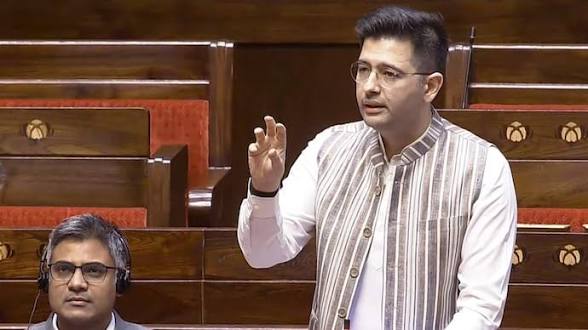
“I Speak on Public Issues, Is That a Crime?” – Raghav Chadha Hits Back Amid Political Storm
A fresh political controversy has erupted after 0, a prominent leader of the Aam Aadmi Party (AAP), made a strong statement defending his right to speak on public issues. His remarks came in response to growing criticism from opposition parties, who have raised concerns and even questioned his intent, invoking comparisons with the case of 1.
The political atmosphere in India has been increasingly tense, with debates over freedom of expression, accountability, and political responsibility dominating headlines. Chadha’s statement — “I speak on public issues, is that a crime?” — has sparked a broader discussion about the role of politicians in raising public concerns.
What Exactly Happened?
The controversy began when Raghav Chadha publicly addressed several governance and policy-related issues, questioning decisions and highlighting concerns that he believes directly impact citizens. However, his remarks did not sit well with opposition leaders, who accused him of creating unnecessary political noise and diverting attention.
In response, Chadha defended his stance firmly, stating that raising public issues is not only his right but also his duty as a public representative. His statement quickly went viral, drawing both support and criticism across social media and political circles.
Why Is the Opposition Reacting?
Opposition parties have taken a strong stand, suggesting that such statements may be politically motivated. Some leaders have even drawn parallels with past controversies involving Swati Maliwal, questioning whether similar patterns are emerging within AAP.
The reference to Swati Maliwal has added a new dimension to the debate. Maliwal, known for her outspoken views, has previously been at the center of political discussions, and her name being invoked again indicates how past events continue to influence present narratives.
Freedom of Speech vs Political Responsibility
At the core of this issue lies a fundamental question: where should the line be drawn between freedom of speech and political responsibility?
- Freedom of Speech: Politicians have the right to express opinions and raise issues affecting the public.
- Accountability: Statements made by public figures can influence public perception and must be responsible.
- Political Strategy: Sometimes, statements may also serve strategic or electoral purposes.
Raghav Chadha’s argument leans heavily toward the importance of open dialogue in a democracy, while critics argue that not all statements contribute constructively.
Public Reaction: Divided Opinions
The public response to this controversy has been sharply divided:
- Supporters believe Chadha is courageously raising important issues.
- Critics feel he is politicizing matters unnecessarily.
- Neutral observers see this as a reflection of broader political tensions.
Social media platforms have been flooded with debates, hashtags, and opinions, making this issue trend across digital platforms.
Comparison Table: Key Perspectives
| Aspect | Raghav Chadha’s View | Opposition’s View |
|---|---|---|
| Public Statements | Necessary for democracy | May be politically motivated |
| Freedom of Speech | Fundamental right | Should be exercised responsibly |
| Reference to Swati Maliwal | Irrelevant comparison | Important precedent |
| Impact on Public | Raises awareness | Creates confusion |
Political Context: A Larger Narrative
This controversy is not an isolated incident. It reflects a larger trend in Indian politics where public statements, media narratives, and political strategies intersect. Leaders across parties increasingly use public platforms to shape narratives, often leading to clashes like this one.
The Aam Aadmi Party, known for its activist-style politics, has often encouraged leaders to speak openly on governance issues. However, this approach also invites scrutiny and criticism from rivals.
Role of Media and Social Platforms
Media coverage and social media amplification have played a crucial role in escalating this issue. Within hours of Chadha’s statement, news outlets and online platforms turned it into a national debate.
This raises another important question: are media platforms amplifying genuine issues or intensifying political conflicts for engagement?
Key Facts You Should Know
- Raghav Chadha is a Rajya Sabha MP and a prominent AAP leader.
- His statement focused on raising public concerns, not personal attacks.
- Opposition leaders referenced Swati Maliwal to question intent.
- The issue has gained massive traction online.
What This Means for Indian Politics
This controversy highlights several important trends:
- Increased Political Polarization: Every statement is closely scrutinized.
- Growing Role of Public Discourse: Politicians are more vocal than ever.
- Media Influence: Narratives can shift rapidly based on coverage.
As India continues to evolve as a लोकतांत्रिक nation, debates like this will play a crucial role in shaping political culture.
Conclusion
The statement by Raghav Chadha — “I speak on public issues, is that a crime?” — has become more than just a remark. It has triggered a nationwide debate on democracy, freedom of speech, and political accountability.
While supporters see it as a bold defense of democratic values, critics view it as a calculated political move. The truth likely lies somewhere in between.
What remains clear is that such debates are essential in a democracy. They encourage discussion, bring issues to light, and keep political systems accountable.
As the situation unfolds, all eyes will remain on how both AAP and opposition parties navigate this controversy — and what it means for the future of political discourse in India.
FAQs
1. What did Raghav Chadha say?
He questioned whether speaking on public issues should be considered a crime, defending his right to raise concerns.
2. Why is Swati Maliwal being mentioned?
Opposition leaders referenced past controversies involving her to question the current situation.
3. Is this a legal issue?
No, it is primarily a political and public discourse issue.
4. What is the main debate about?
The debate revolves around freedom of speech versus political responsibility.
5. Why is this trending?
The statement sparked widespread discussion across media and social platforms, making it a major political topic.

Gaurav Yadav is a news writer and digital publisher from Haryana, India. He focuses on covering latest news, technology updates, automobile developments, and trending public-interest topics. With a strong interest in how information impacts everyday readers, Gaurav aims to present news in a clear, factual, and easy-to-understand manner.
He actively tracks ongoing trends, official announcements, and emerging stories to ensure readers receive timely and reliable updates. Through his work, he is committed to maintaining transparency, accuracy, and responsible reporting while building a trustworthy news platform for a wide audience.