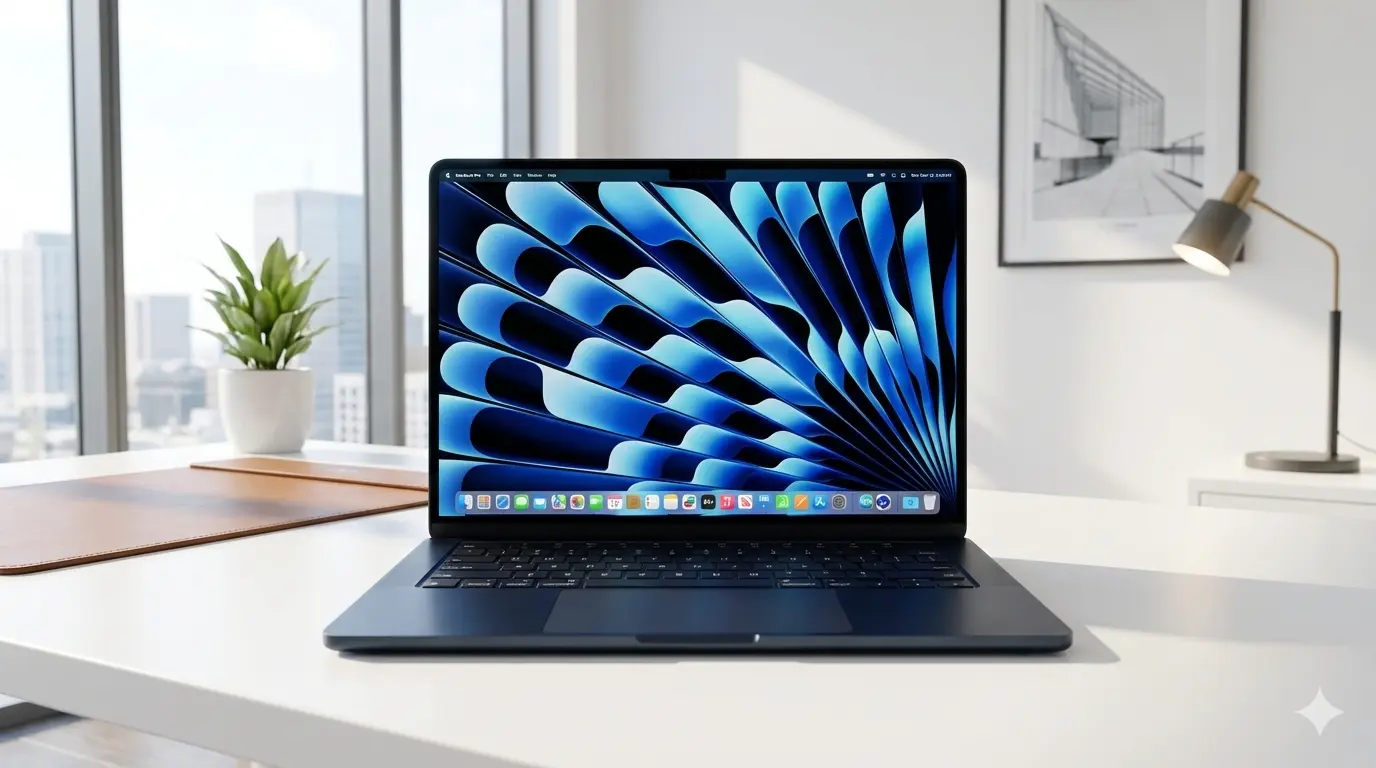
The ₹20,000 Discount Trick on MacBook Air M4 — Explained, Step by Step
If you’ve been watching laptop prices lately, you’ve probably seen people casually post screenshots: “Bought a MacBook Air M4 for ₹79,900 — saved ₹20,000!” It looks like magic, but it isn’t. It’s the result of stacking legitimate offers: education pricing, bank instant cashback, exchange value for your old device, and retailer discounts or coupons. This guide explains how the trick works, why it sometimes fails, and how to reproduce the savings without ending up with unexpected charges or a dud warranty.
Below I break everything down in plain language, with real examples and practical checks so you can decide whether it’s worth the chase.
What “₹20,000 discount” actually means
When people say “₹20,000 off,” they’re usually referring to an effective discount — the total of several savings added together, not one single ₹20,000 markdown on the sticker price. For a MacBook Air M4, stackable pieces are:
- Education discount (Apple’s student/teacher pricing) — quoted around ₹10,000 on base models.
- Bank instant cashback or card offer — banks sometimes run card-linked promotions giving up to ₹10,000 cashback or instant discounts during sales of this MacBook Air M4. These offers are usually from cards issued by banks such as the ones mentioned in the media coverage.
- Exchange value — retailers offer trade-in or exchange credit for your old laptop/phone; depending on the device and condition, this can range widely and occasionally adds another ₹10–20k on top. Retailers like Flipkart and some local chains list exchange offers directly on product pages.
- Retailer instant discount / coupons / unboxed deals — stores may offer an instant store discount or run festival/unboxed device sales, shaving the price further.
Stack those parts together and the effective saving can easily reach or exceed ₹20,000 — but it’s conditional. Each piece carries terms. The trick is knowing which ones stack, and how to avoid double-counting or getting an ineligible cashback.
A concrete example (numbers you can follow)
Let’s build a realistic example using headline figures you’ll actually see.
- Sticker price (base MacBook Air M4, 13.6-inch, 16GB/256GB) — assume ₹99,900 (Apple’s base pricing for a recent MacBook Air model has hovered around this range).
- Education discount — Apple shows education pricing that often knocks off about ₹10,000 on selected Mac models. Apply that and the price becomes roughly ₹89,900.
- Bank instant cashback — during promotional windows, using a qualifying credit or debit card will give an instant discount or cashback (e.g., ICICI/Axis bank card offers reported in press). That can be another ₹5k–₹10k depending on the bank and the promotion; subtract another ₹10,000 hypothetically to reach ₹79,900 (note cashback mechanics discussed below).
- Exchange value — if your old laptop is in good condition, some retailers will give an exchange value; advertised exchange offers on product pages often show up to ₹20,000 for eligible devices. In practice, the amount depends on device model, age and condition. If you get even ₹10,000 in exchange credit, your out-of-pocket falls to ₹69,900.
See how the total “discount” looks like a single ₹30k reduction if you add all parts — but it’s really multiple programs paying out in different ways. The headline “₹20,000 trick” usually refers to stacking just the most reliable elements (education + bank cashback + a modest exchange), which is simpler to reproduce.
How these pieces actually stack (and where they don’t)
Not every offer can be combined, and not every retailer honors all pieces together.
- Apple Education Pricing is applied at checkout when you verify student/teacher status on Apple’s education store. This is a direct price reduction and generally stacks cleanly with Apple-financed EMI or no-cost EMI options.
- Bank cashback / instant discount is applied by the retailer based on the card you use at checkout. Different banks have different partner retailers and different qualifying transactions (EMI vs one-time). That’s why press articles often list eligible banks and cards. Always read the bank offer T&Cs before assuming eligibility.
- Exchange offers are retailer-specific. Flipkart and some large resellers show on-page exchange estimates that depend on the model and condition you enter. The retailer inspects the device at drop-off and can adjust the amount. The quoted “up to ₹20,000” is a maximum, not a guarantee.
- Store discounts / coupons / unboxed deals vary by seller. A physical store may give a different instant discount than an online marketplace. Authorized resellers sometimes run their own limited-time promotional discounts that stack with bank offers, but it’s rare for marketplace coupons to stack with manufacturer coupons unless explicitly stated.
Rule of thumb: education pricing + bank card offer + exchange is the combination most commonly used to achieve the “₹20,000” effective savings. Retailer coupons and festival discounts are extra boosters when they apply.
Where people get tripped up
- Cashback vs instant discount — cashback may arrive as wallet credit, card statement credit, or bank EMI rebate, and it can take weeks to post. An “instant discount” reduces the billed amount immediately, which is more straightforward. Don’t assume a cashback that arrives later is usable for further purchases. Check whether the offer is instant discount or cashback.
- Exchange valuation changes on inspection — retailers often reduce the quoted exchange amount after physically checking the device. Do not forget to back up your data and be prepared for the valuation to be lower than the quote.
- Ineligible models or conditions — older devices, devices with missing parts or heavy wear, or OEM models may be excluded or will get very low exchange values.
- Double-dipping limitations — some promotions explicitly state they cannot be combined with other offers. Always read the fine print carefully before assuming two discounts will be applied simultaneously.
- Warranty and serial number transfer — if you buy an “unboxed” or “renewed” unit, warranty coverage can differ. If you’re buying new but through a third-party reseller, confirm whether Apple warranty and AppleCare+ transfers apply.
Step-by-step: How to reproduce the ₹20,000 effective discount safely
- Decide where you’ll buy — Apple’s education store is straightforward for student pricing; marketplaces like Flipkart show exchange and bank offers on the product page. Compare the final price on both to know which stacking options are available.
- Check education eligibility first — if you qualify, use Apple’s education store. The education reduction is a guaranteed, simple cut when you verify.
- Find current bank offers — check the latest card-linked promos for the retailer you’re using. Press reports often list the banks participating in big launches and sale windows. If you’re using a particular credit card, confirm whether the offer applies to EMI transactions, one-time payments, or both.
- Get a realistic exchange estimate — use the retailer’s exchange tool and be honest about condition. Prepare to show proof of functionality (charging, screen, battery health) and the original accessories — this often preserves higher exchange valuations.
- Read all T&Cs — Check whether the retailer allows combining exchange with bank offers and education pricing. If unclear, call customer support and get a confirmation reference number or screenshot.
- Checkout carefully — watch the order summary before you pay money. It should show each applied discount in it. If you see a missing discount, donot complete the transaction until customer support clarifies.
- Back up and reset old device — if you plan to exchange, back up your data, sign out of accounts, and factory-reset the old device.
- Inspect receipts and warranty — after delivery, verify Apple warranty (serial number check on Apple’s site) and save receipts for any cashback submissions.
Smart hacks (ethical and safe)
- Time your purchase for festival sales or Apple event windows — banks and retailers often time their offers around big sales or product launches. Media outlets usually list participating banks for those events.
- Compare authorized resellers — sometimes a local authorized reseller will match or beat marketplace bundles, and you get in-person service and easier exchange inspection. Use price comparison pages and reseller listings to find the best total offer.
- Consider open-box or factory-refurbished options only if you understand the warranty differences. These can deliver bigger immediate savings but come with different return windows and warranty coverage.
The ethics and the risk: what to watch out for
- Scams and fake “exchange” apps — only use exchange valuations provided by reputable retailers. If a deal sounds too good or asks for odd payment flows, walk away.
- Misleading ads — many listings publish aggressive “up to ₹20,000” language; always drill down to the model and condition required for that max value.
- Hidden fees — customs, extended warranties, or add-on services can add cost. Check the final invoice carefully.
- Warranty loopholes — confirm whether third-party seller promotions affect manufacturer warranty or AppleCare transfer.
Quick checklist before you buy
- Confirm Apple education eligibility and the exact model that qualifies.
- Check bank/card offer fine print: eligible cards, minimum transaction value, EMI vs outright purchase, and cashback timeline.
- Get an exchange estimate and know what device condition will preserve the quoted value.
- Compare final prices across Apple, Flipkart and other authorized resellers before hitting pay.
- Keep screen captures of the checkout page showing applied discounts and the final payable amount.
Final verdict: is the ₹20,000 trick worth it?
Yes — if you do the homework. The savings are real and reproducible when you:
- qualify for education pricing (or otherwise catch a retailer + bank combo),
- have an exchangeable device in good condition, and
- confirm that the offers actually stack on the checkout page.
If you skip the checks — especially exchange inspection rules or the bank offer fine print — you can get disappointed when cashback doesn’t arrive or the exchange valuation drops. Treat the “₹20,000 trick” as a legitimate savings strategy, not a guaranteed coupon, and you’ll come away with a great deal and zero regrets.

Hello sir thanks