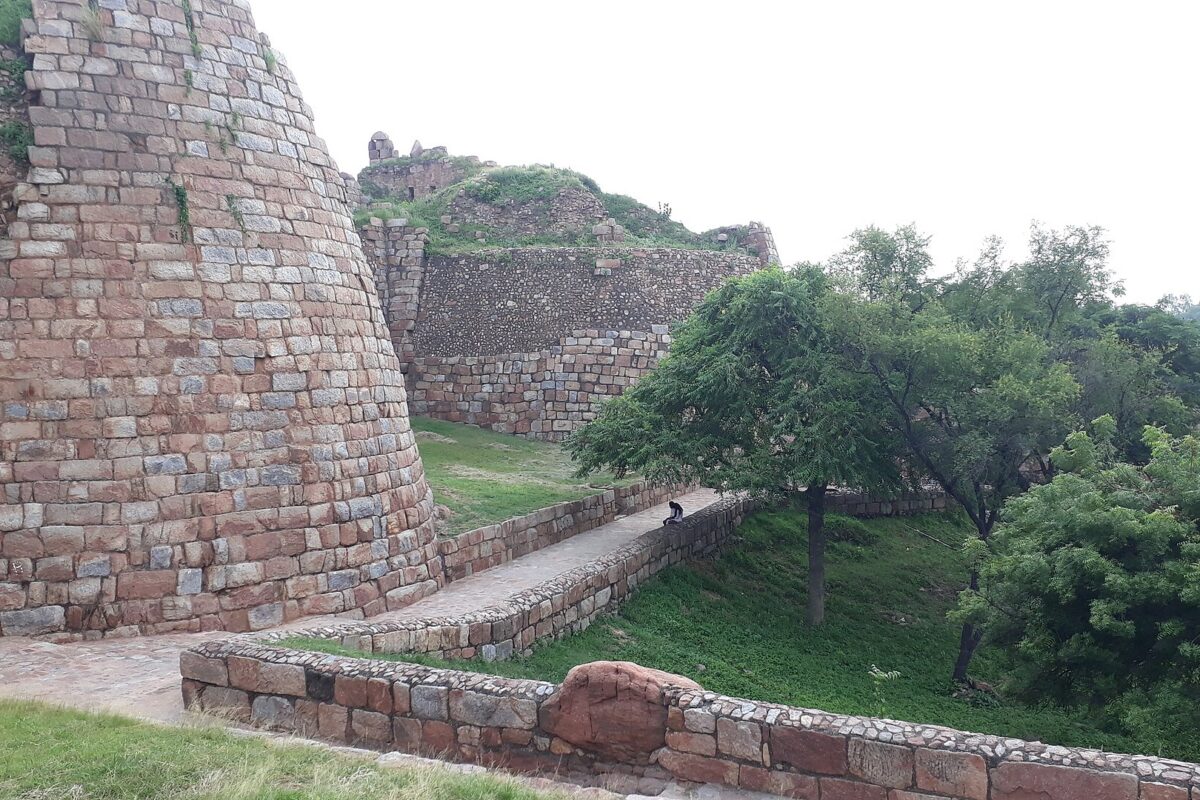
Tughlaqabad is the kind of place that makes you realise how many cities Delhi has been. Its rubble walls stretch for kilometres across a rocky ridge in the south-east of the city, enclosing the ruins of a capital that was occupied for only a few years.
A capital built in a hurry
Ghiyasuddin Tughlaq, founder of the Tughlaq dynasty, built the fort in the 1320s as the new seat of the Delhi Sultanate. It was abandoned soon after his death. A popular legend attributes this to a curse by the Sufi saint Nizamuddin Auliya, with whom the Sultan had quarrelled: may the city stay deserted, or be inhabited by herders. Historians point to more practical reasons, including water shortages, but the story is still told all over Delhi.
What to see
- The walls and bastions — sloping rubble walls with round bastions, typical of Tughlaq military architecture. Climb carefully for views across the fort.
- The citadel and palace area — the highest part of the fort, with ruined halls and underground passages.
- Tomb of Ghiyasuddin Tughlaq — across the road, a compact tomb of red sandstone and white marble, once surrounded by water and linked to the fort by a causeway.
Tips for visiting
- The site is large, rough underfoot and has little shade — go early and carry water.
- Many areas are overgrown; stick to visible paths and visit with company.
- Watch out for monkeys and don’t carry open food.