Humayun’s Tomb is often described as the first great Mughal garden tomb, and walking through its gateway into the four-part garden, you can see why it influenced what followed — including the Taj Mahal, built decades later.
Who built it
The Mughal emperor Humayun died in 1556 after a fall on the stairs of his library. His widow, Haji Begum (also known as Bega Begum), commissioned his tomb, which was completed around 1570. The architect was the Persian Mirak Mirza Ghiyas. Its Persian-style double dome, red sandstone and white marble created a new language for Mughal architecture. The complex became a UNESCO World Heritage Site in 1993.
What to see
- The main tomb — raised on a high platform of arches, with Humayun’s cenotaph in the central chamber and many other Mughal family graves in the side rooms.
- The charbagh — the garden divided into four by walkways and water channels.
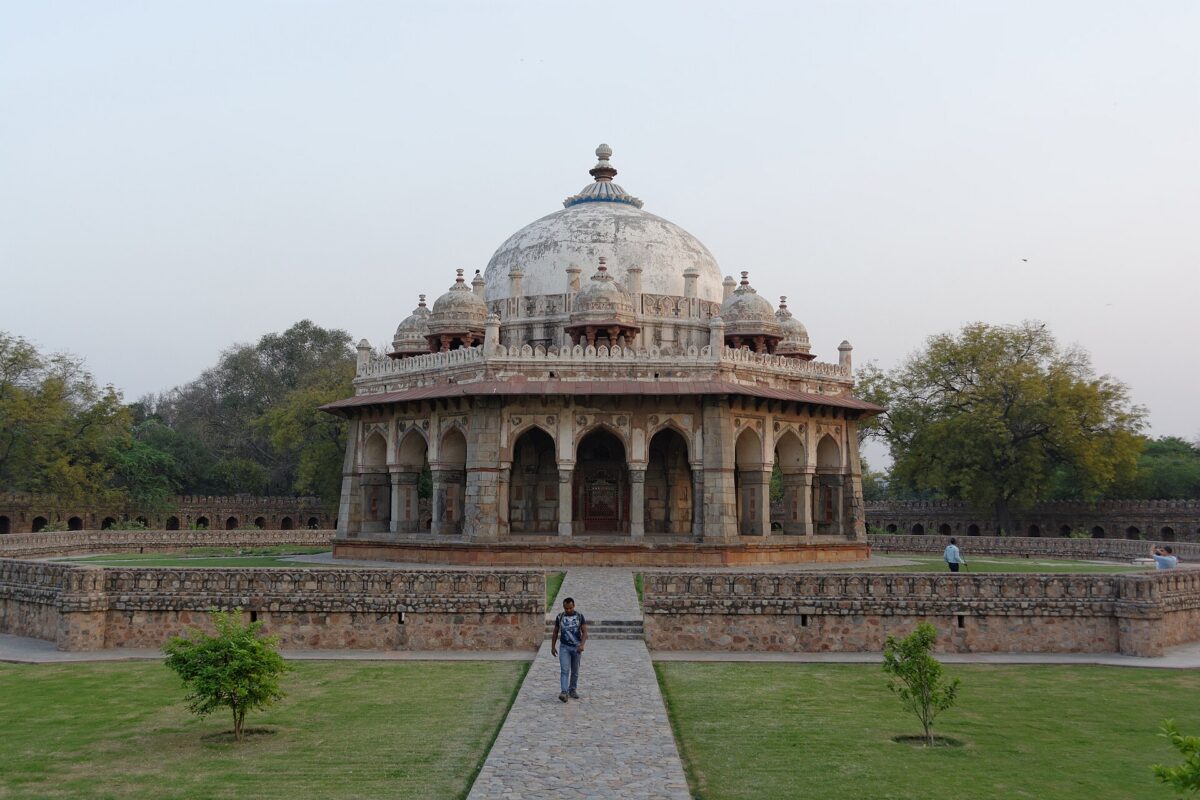
- Isa Khan’s tomb — an octagonal tomb near the entrance, older than Humayun’s and a fine example of Sur-period architecture.
- The Barber’s Tomb and Arab Serai — smaller structures inside the complex that many visitors skip.
Make a morning of it
Sunder Nursery, a restored garden with several monuments, is right next door and works well before or after the tomb. Nizamuddin Dargah is a short walk away, and the qawwali there on Thursday evenings is a memorable way to end the day.
Good to know
Buy tickets online to skip the queue. The platform stairs are steep in places, so watch your step. Late afternoon is lovely for photography, but arrive at least an hour before closing.